Simple Things You Can Do to Help Birds
CONNECT KIDS (OF ALL AGES!) WITH NATURE
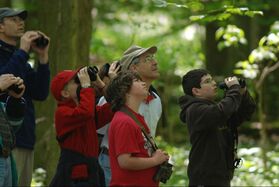
The future of bird conservation depends on people caring about birds and the natural world. With each passing day, advancements in technology in our ever-changing world are pulling kids further and further from time outdoors.
Devote a few minutes to take your kids out for a walk. Volunteer to lead nature hikes for kids at a nature center, for your local Audubon Chapter, or for your family and friends. You don't have to be an expert to take people on a bird walk. All you have to have is enthusiasm; the birds will do the rest!
If you're interested but still uncertain about the best way to go about it, here are some great tips on How to take someone on their first birding adventure.
The future of bird conservation depends on people caring about birds and the natural world. With each passing day, advancements in technology in our ever-changing world are pulling kids further and further from time outdoors.
Devote a few minutes to take your kids out for a walk. Volunteer to lead nature hikes for kids at a nature center, for your local Audubon Chapter, or for your family and friends. You don't have to be an expert to take people on a bird walk. All you have to have is enthusiasm; the birds will do the rest!
If you're interested but still uncertain about the best way to go about it, here are some great tips on How to take someone on their first birding adventure.
BUY CONSERVATION STAMPS
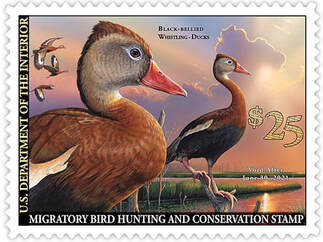
Purchase the Federal Migratory Bird Hunting and Conservation Stamp
a.k.a. the Duck Stamp ($25)
Since the 1930s, the Federal Duck Stamps have contributed over $850 million and have helped to protect 5.5 million acres of habitat for wildlife and future generations. Buying the stamp is perhaps the single simplest thing individuals can do to support a legacy of wetland and grassland conservation for birds. Virtually all the stamp proceeds ($.98 of every $1) go to help secure valuable Refuge System habitats.
We feel strongly that every birder should purchase a Duck Stamp to...
1) support this important habitat conservation program; and
2) provide proof that birders will voluntarily purchase this stamp in order to support the resource.
For more information about Duck Stamps, including where to purchase one, click HERE.
Purchase the Federal Migratory Bird Hunting and Conservation Stamp
a.k.a. the Duck Stamp ($25)
Since the 1930s, the Federal Duck Stamps have contributed over $850 million and have helped to protect 5.5 million acres of habitat for wildlife and future generations. Buying the stamp is perhaps the single simplest thing individuals can do to support a legacy of wetland and grassland conservation for birds. Virtually all the stamp proceeds ($.98 of every $1) go to help secure valuable Refuge System habitats.
We feel strongly that every birder should purchase a Duck Stamp to...
1) support this important habitat conservation program; and
2) provide proof that birders will voluntarily purchase this stamp in order to support the resource.
For more information about Duck Stamps, including where to purchase one, click HERE.
OHIO WILDLIFE LEGACY STAMP ($15)
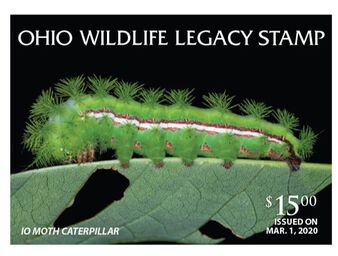
Buying this collectible wildlife stamp will show your support for:
Buying this collectible wildlife stamp will show your support for:
- 1) habitat restoration, land purchases, and conservation easements;
- 2) endangered and threatened native species;
- 3) educational products for students and wildlife enthusiasts; and
- 4) wildlife and habitat research projects.
For more information about the Ohio Wildlife Legacy Stamp, including where to purchase one, click HERE.
KEEP CATS INDOORS
From Our Partners at American Bird Conservancy
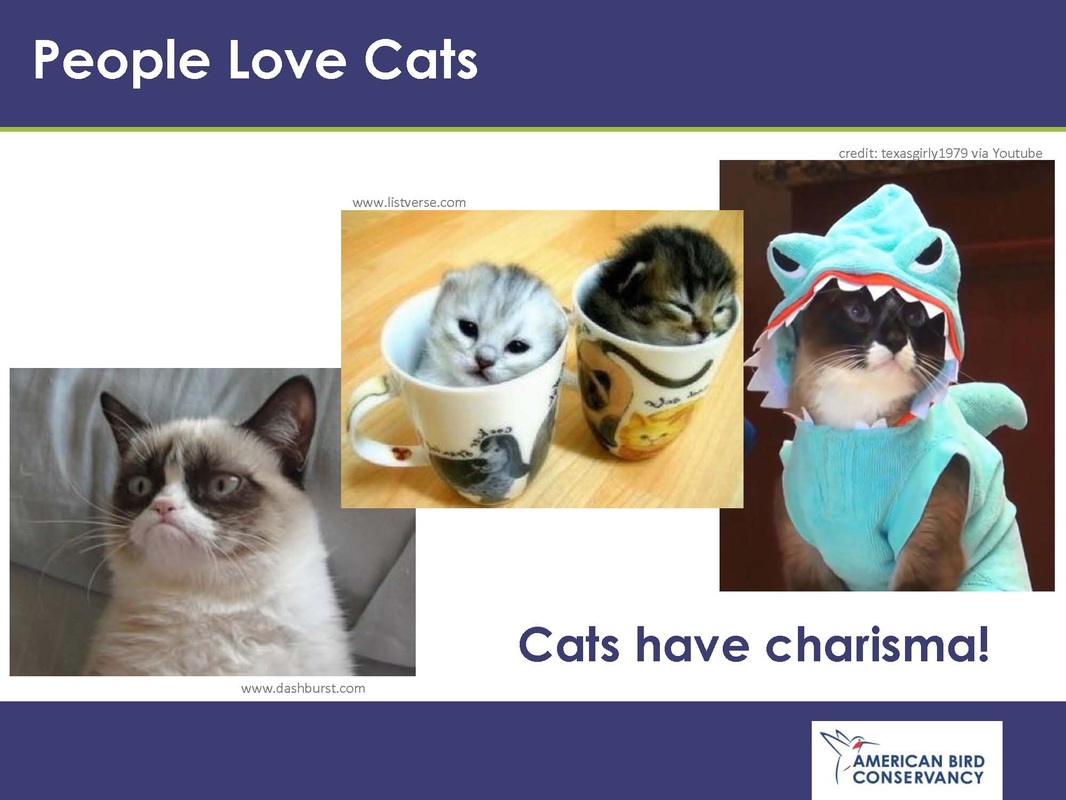
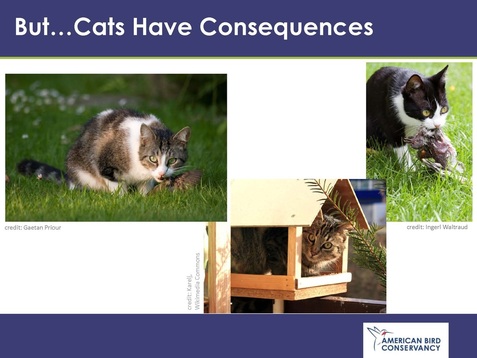
Domestic cats (Felis catus) can provide excellent companionship and make wonderful pets. But when allowed to roam outdoors, this non-native, invasive species threatens the welfare of birds and other wildlife and endangers the integrity of the ecosystems into which domestic cats are introduced.
Domestic cats are recognized as a threat to global biodiversity. Cats have contributed to the extinction of 33 species across the world and continue to adversely impact a wide variety of species, including those that are threatened or endangered. The ecological dangers are so critical that the International Union for the Conservation of Nature (IUCN) now lists domestic cats as one of the world’s worst non-native invasive species.
In the U.S., free-roaming domestic cats kill an estimated 1.4-3.7 billion birds and 6.9-20.7 billion mammals. The sheer quantity of cat-caused mortality is staggering. For perspective, consider that 1.4 billion is equivalent to the entire human population of China, the most populous country in the world. As the number of cats continues to grow and owners continue to allow their pets to roam, harmful impacts will surely increase.
From Our Partners at American Bird Conservancy
Domestic cats (Felis catus) can provide excellent companionship and make wonderful pets. But when allowed to roam outdoors, this non-native, invasive species threatens the welfare of birds and other wildlife and endangers the integrity of the ecosystems into which domestic cats are introduced.
Domestic cats are recognized as a threat to global biodiversity. Cats have contributed to the extinction of 33 species across the world and continue to adversely impact a wide variety of species, including those that are threatened or endangered. The ecological dangers are so critical that the International Union for the Conservation of Nature (IUCN) now lists domestic cats as one of the world’s worst non-native invasive species.
In the U.S., free-roaming domestic cats kill an estimated 1.4-3.7 billion birds and 6.9-20.7 billion mammals. The sheer quantity of cat-caused mortality is staggering. For perspective, consider that 1.4 billion is equivalent to the entire human population of China, the most populous country in the world. As the number of cats continues to grow and owners continue to allow their pets to roam, harmful impacts will surely increase.
|
|
KEEP CATS INDOORS!
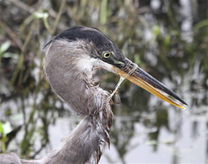
Great Blue Heron with fishing line wrapped around its bill
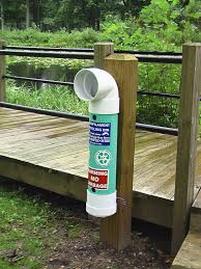
Simple Fishing Line Receptacle
|
PICK UP DISCARDED FISHING LINE
Every year, thousands of birds become entangled in abandoned fishing line and die from drowning, starvation, dehydration, or strangulation. Sometimes these animals struggle for days before they die. Because fishing line is such a potent hazard to birds, it is imperative that it be properly cleaned up and safely disposed of. Whether or not you fish, you can always help. Here's an example of this issue from our friends at Cleveland's WKYC Channel 3. From HOW FISHING LINE HURTS BIRDS by Melissa Mayntz
|
DRINK BIRD-FRIENDLY COFFEE
Drinking certified bird-friendly coffee is an easy (and tasty!) way to support bird habitat conservation. To read more about how drinking shade-grown coffee helps migratory birds, please click HERE.
BSBO is happy to recommend BIRDS & BEANS for your certified bird-friendly coffee choice.
Birds & Beans
We want to make sure that people who enjoy coffee and care about conservation can get great coffee that they know is good for bird conservation, family farmers, and the environment. Our commitment to quality and service ensures that fresh-roasted, great-tasting ‘Birds & Beans - The Good Coffee™’ flies straight to your door and into your cup. For more information or to order, click HERE.
"I'm enthusiastic about 'Birds & Beans - The Good Coffee™' because I think this could be the initiative that actually connects the dots and makes something happen. And it gives me a chance to work with great people on a worthwhile project; I feel blessed to be involved.” ~Kenn Kaufman
Drinking certified bird-friendly coffee is an easy (and tasty!) way to support bird habitat conservation. To read more about how drinking shade-grown coffee helps migratory birds, please click HERE.
BSBO is happy to recommend BIRDS & BEANS for your certified bird-friendly coffee choice.
Birds & Beans
We want to make sure that people who enjoy coffee and care about conservation can get great coffee that they know is good for bird conservation, family farmers, and the environment. Our commitment to quality and service ensures that fresh-roasted, great-tasting ‘Birds & Beans - The Good Coffee™’ flies straight to your door and into your cup. For more information or to order, click HERE.
"I'm enthusiastic about 'Birds & Beans - The Good Coffee™' because I think this could be the initiative that actually connects the dots and makes something happen. And it gives me a chance to work with great people on a worthwhile project; I feel blessed to be involved.” ~Kenn Kaufman
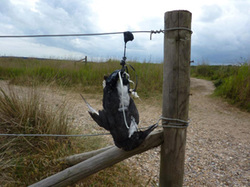 Guillemot killed by balloon litter
DON'T RELEASE BALLOONS AND SKY LANTERNS
All released balloons, including those falsely marketed as “biodegradable latex,” return to Earth as ugly litter. They kill countless animals and cause dangerous power outages. Balloons are also a waste of helium, a finite resource. Balloons can travel thousands of miles and pollute the most remote and pristine places.
A simple search on the internet reveals a startling number of graphic photos, like this one of the Guillemot (pictured to the left) hanging from the fence after becoming entangled in balloons and strings.
Please, do not release balloons and sky lanterns. Learn more about this issue by visiting www.balloonsblow.org
All released balloons, including those falsely marketed as “biodegradable latex,” return to Earth as ugly litter. They kill countless animals and cause dangerous power outages. Balloons are also a waste of helium, a finite resource. Balloons can travel thousands of miles and pollute the most remote and pristine places.
A simple search on the internet reveals a startling number of graphic photos, like this one of the Guillemot (pictured to the left) hanging from the fence after becoming entangled in balloons and strings.
Please, do not release balloons and sky lanterns. Learn more about this issue by visiting www.balloonsblow.org
JOIN THE BSBO FLOCK!
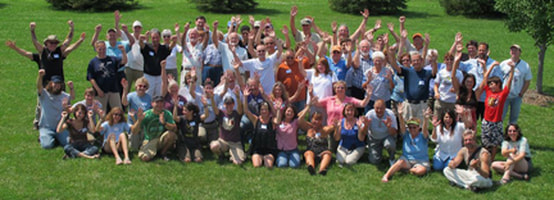
Black Swamp Bird Observatory operates primarily through the generosity of its members and donors. Joining the BSBO team by becoming a member is a great way to support the Observatory's work and stay in touch with our mission. In return, we offer our members discounts in our gift shop, our bi-annual BSBO News, discounts on field trips, events, and The Biggest Week In American Birding, and the reward of knowing that you're helping the birds by supporting a good cause!
Join HERE!
Black Swamp Bird Observatory operates primarily through the generosity of its members and donors. Joining the BSBO team by becoming a member is a great way to support the Observatory's work and stay in touch with our mission. In return, we offer our members discounts in our gift shop, our bi-annual BSBO News, discounts on field trips, events, and The Biggest Week In American Birding, and the reward of knowing that you're helping the birds by supporting a good cause!
Join HERE!